Whats New
Release 2022.08
Click an entry to see more details
Toolpath Calculation
- 3 Axis3 Axis
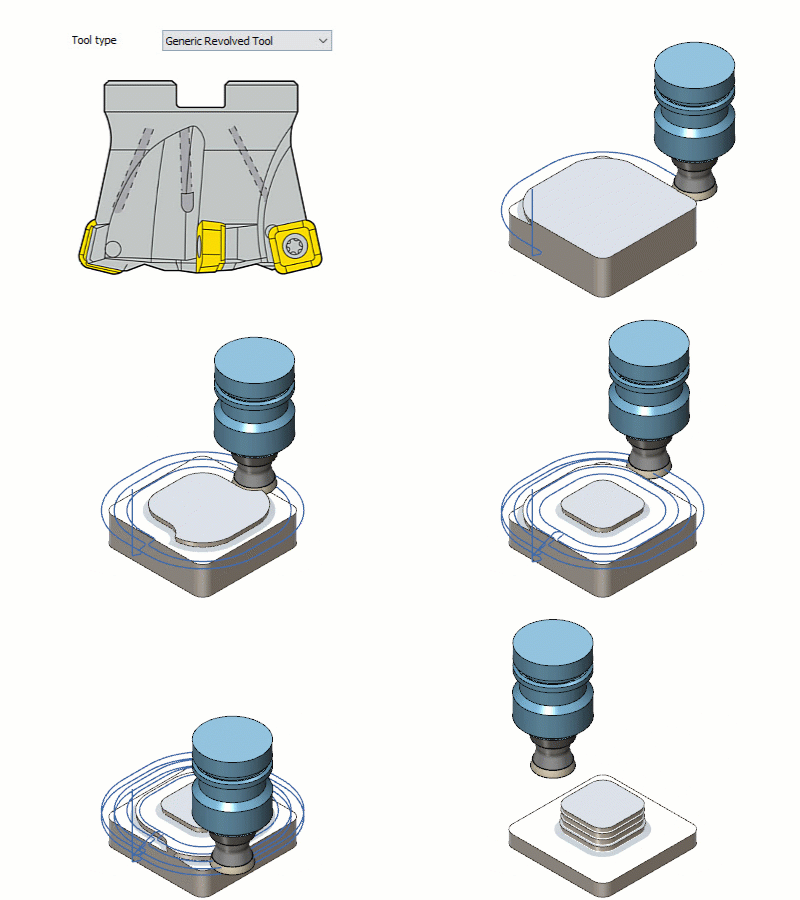
Generic revolved tool for roughing
A new feature has been added to the Triangle mesh based roughing strategy.
A new generic revolved tool type is now supported for all roughing types. A custom shape for the cutting and non-cutting tool parts can be defined using the existing tool-profile definition options.
Compared to the previous implementation, there is now support for arbitrary-shaped tools to avoid the simplifications that occurred when using the standard tool primitives. You now get a realistic picture of the material removal process during the cutting simulation that takes into account specific features of the tool shape during the toolpath calculation.
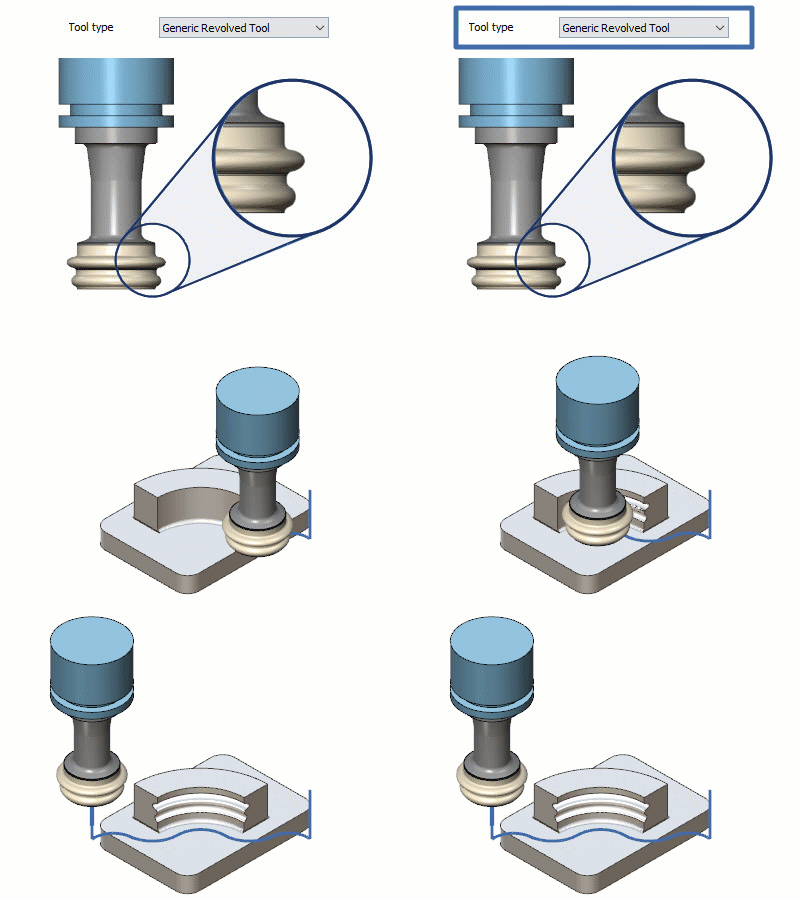
Generic revolved tool for undercuts
A new feature has been added to the Triangle mesh based Constant Z pattern.
A newly implemented generic revolved tool type is now supported for 3-axis undercuts machining. This enables the user to form a complex profile of the finishing surface in a single iteration.
It delivers a high surface quality and extends the application boundaries of a standard Constant Z cycle.
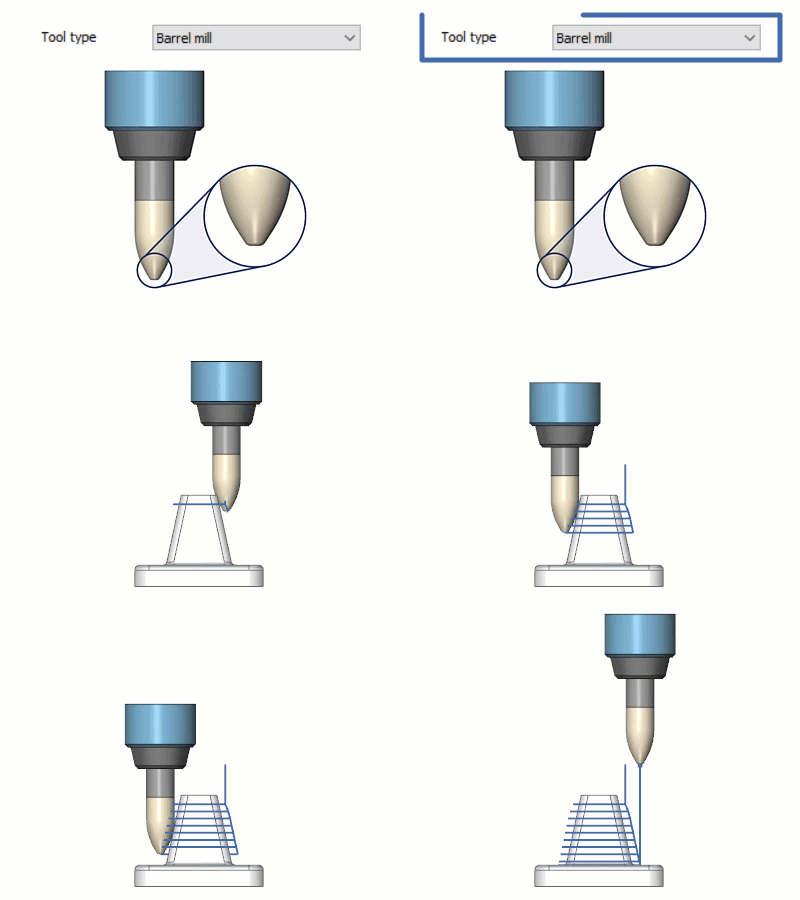
Barrel tools support
The Triangle mesh based and finishing patterns now support Barrel tools.It is now possible to specify a desired tool configuration from a wide range of existing Barrel tool primitives.
Benefits:
- Consistent toolpath that considers all specific features of the current tool shape
- Extend application boundaries
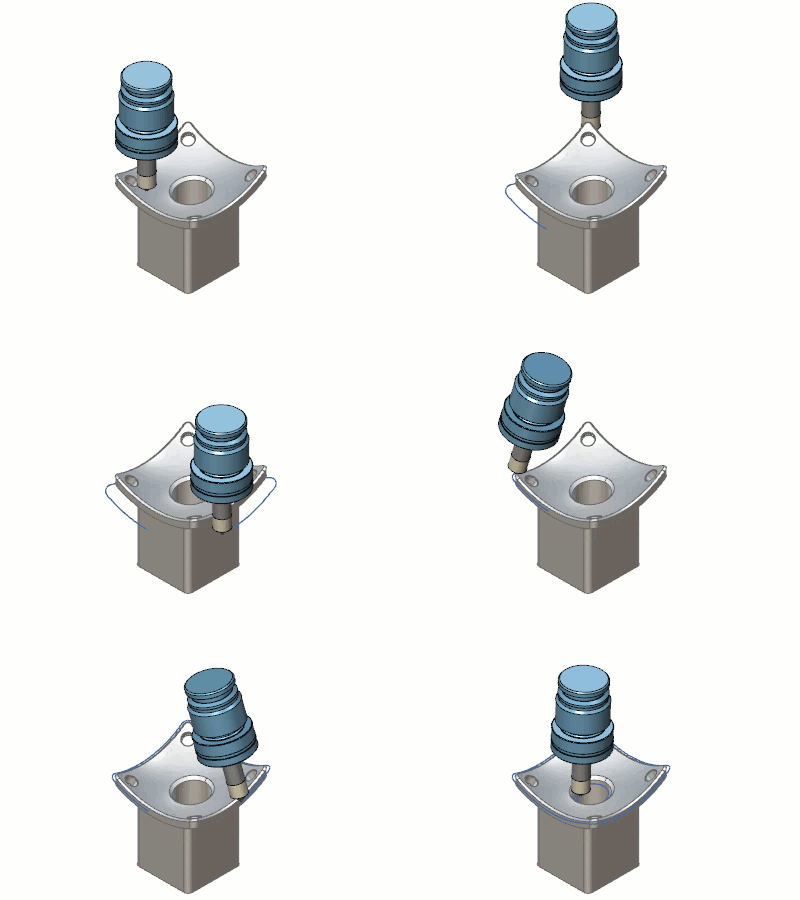
Homing sequence
A new feature has been added to the Triangle mesh based patterns.
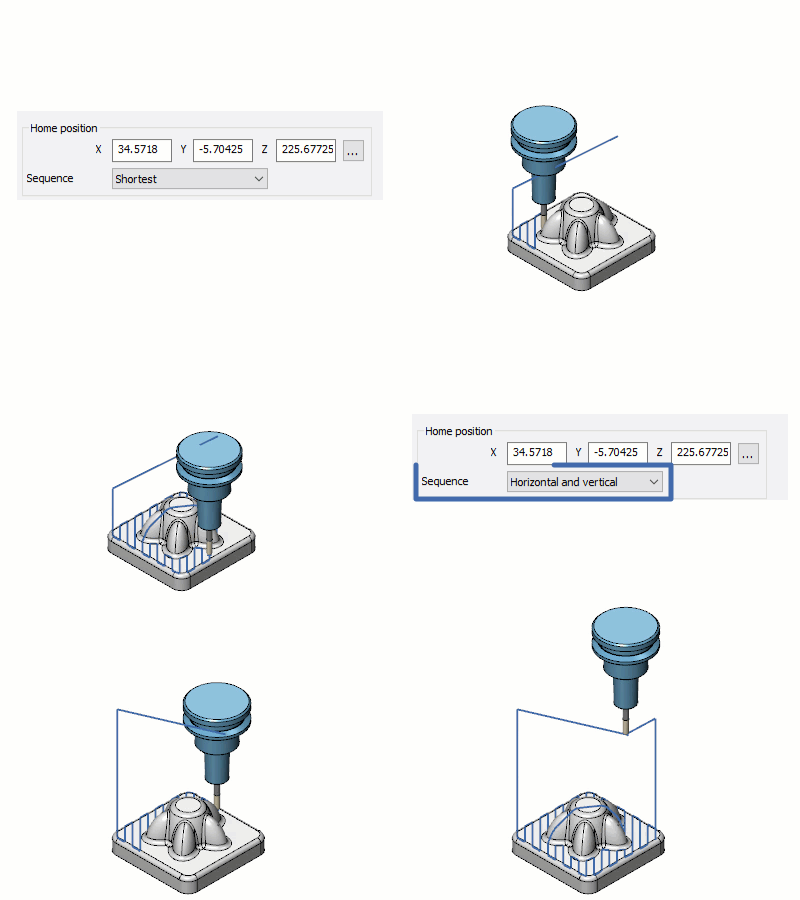
The Horizontal and Vertical sequence enables the user to change the way the tool approaches the workpiece when the Start from home position option is selected. With this new option, the tool transition between the specified home position and the toolpath start point occurs parallel to the machining plane with a further vertical approach up to the slice level.
In the previous implementation, only a direct transition was possible.
This new feature enables users to specify the way in which the tool approaches the workpiece to extend the number of possible solutions.
Independent cutting method for profile pass
A new feature has been added to the Triangle mesh based Rough pattern. These options allow the user to independently set the cutting type and the direction for profile passes such as one way/zigzag or climb/conventional.
Advantage:
- Improved quality of the finishing toolpath

Incremental clearance plane
A new feature has been added to the Triangle mesh based patterns.
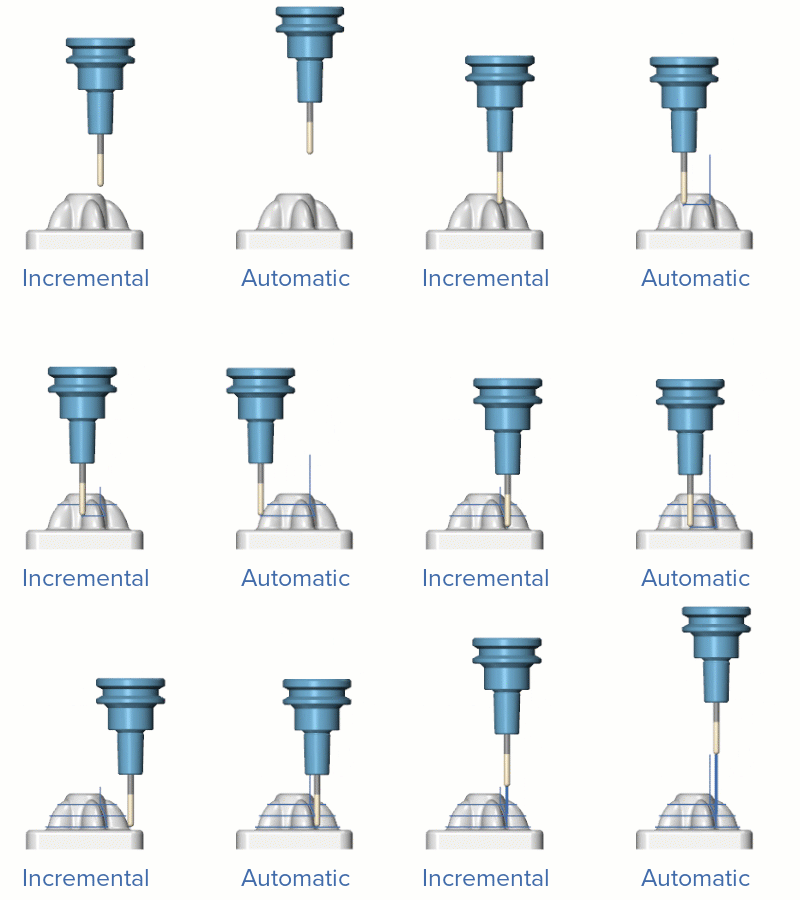
This option allows the user to define an incremental value for the clearance plane height by taking as a reference point the maximum height of stock/machining surfaces/fixture curves.
The main benefit is the reduction in manual input.
Stock silhouette containment options
A new feature has been added to the Triangle mesh based Rough pattern.
This feature limits the machining area by the silhouette of the machining surfaces. It is created in the machining direction.
Compared to existing silhouette feature which is found on the Surface paths tab, the new option using stock silhouette allows the user to define a soft boundary where the tool can approach from outside the boundary. The older containment is treated as a hard boundary where the tool remains inside.The main advantage is easier toolpath control.

Ramp height limitation to maximum stock height
A new feature has been added to the Triangle mesh based patterns.
This feature trims the ramp height by the specified stock surface. The main benefit is that it reduces the air cutting time.

Additional depth step options for 3-axis undercuts
A new feature has been added to the Triangle mesh based Constant Z pattern.
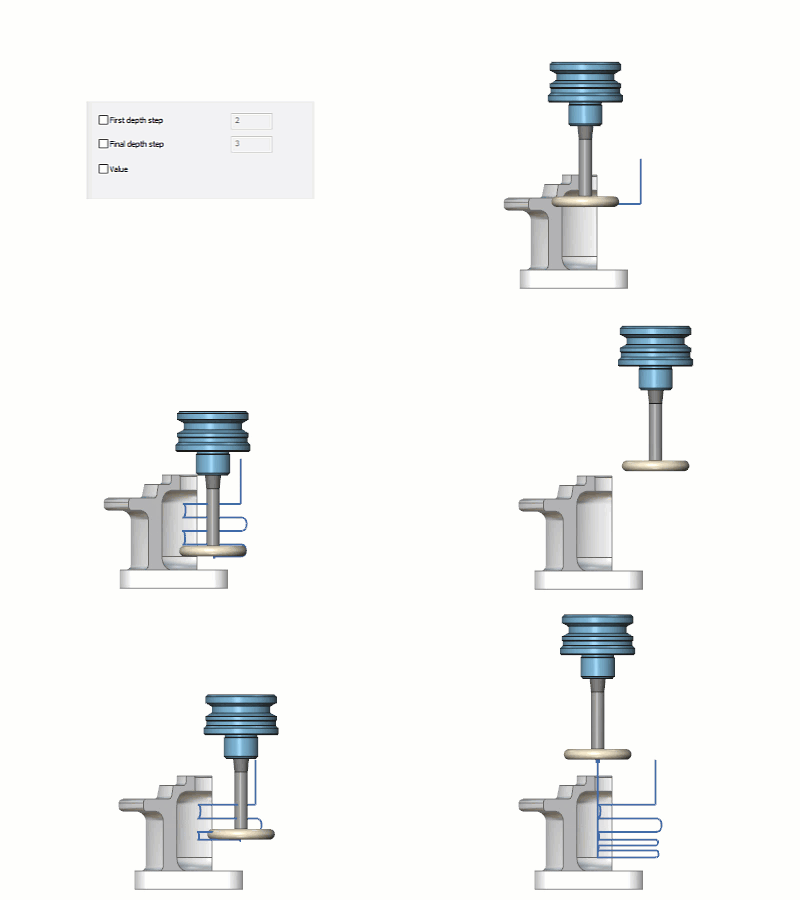
The additional depth step options are now available for 3-axis undercuts. The user can apply different combinations of the First/Final depth step and Value options.
- First/Final depth step: Generate additional toolpath slices at the specified depth for the top and bottom areas.
- Value: Specify the slice height for a particular toolpath within the specified range of machining heights.
These new options offer more accurate undercut area processing for higher quality machining.
Angle range support for 5-axis undercuts
A new feature has been added to the Triangle mesh based Constant Z Undercuts pattern.
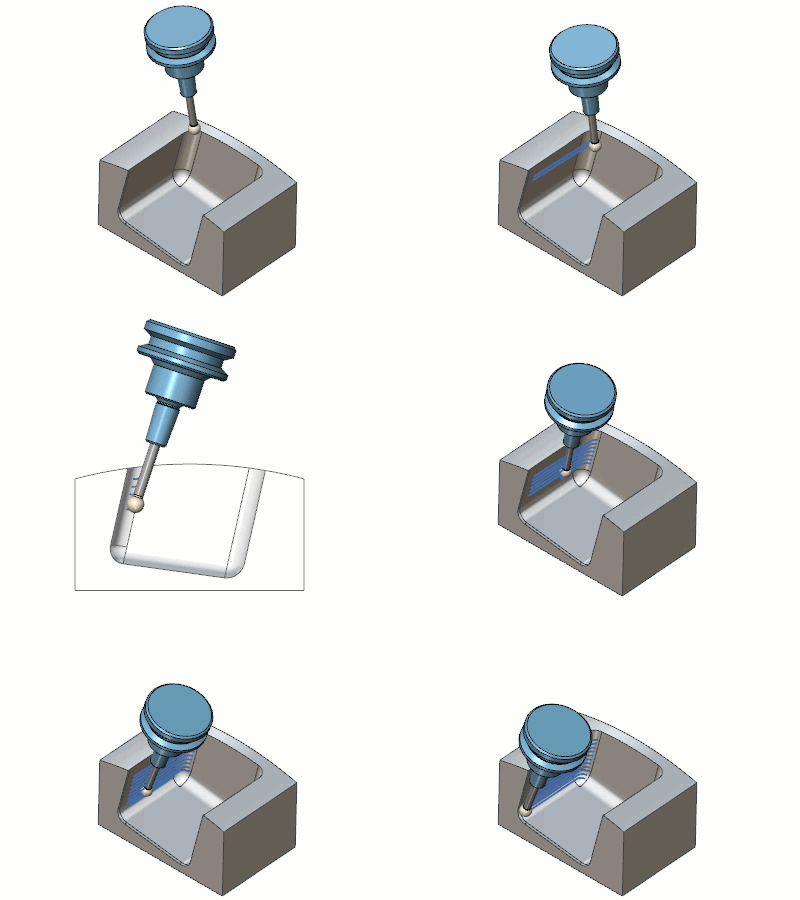
The user now has the possibility to machine everything inside or outside the specified angle range interval also for 5-axis undercuts.
In previous versions, the angle range was supported for normal operations only.

- Multi AxisMulti Axis
Automatic 3+2 Axis Roughing - Sphere clearance type for in-between tool axis changes
A new feature has been added for 3+2 linking that enables users to select the sphere clearance type for linking in-between tool axis changes. The interpolation movement can be clipped by post-processing operations.
The tool vector change is performed on the sphere clearance in an interpolated movement.
This interpolated movement is specially marked, so it can be filtered out by post-processing operations to add special retract and approach macros.

Multi Axis Machining - Automatic Tool Axis Control Option
This is a new feature for Multiaxis Finishing.
This feature adds a new mode called Automatic to the tool axis control. The contact point and the lead/lag angles are automatically defined according to each available tool.
The advantages of this option are:
- Reduced programming time
- Simplified tool axis definition.

Multi Axis Machining - Support for Lollipop Mill
A new feature has been added to Multiaxis Finishing.
With this new feature you can use the Lollipop mill to enhance the range of usable geometries for the finishing cycles.
Multi Axis Machining - Fixed tool axis
A new feature has been added to Multiaxis Roughing.
The Fixed tool axis option offers machining with an arbitrary, user-defined tool orientation.
There are different ways to define the tool axis:
- Two points defined by coordinates or picked from a model
- Predefined orientation along principal coordinate axes X, Y or Z
- A normalized vector component (0,0,1).
This new option extends the range of possible solutions to increase the application boundaries of the Multiaxis Roughing strategy.

- SWARF MachiningSWARF Machining
Chamfer tool support
This is a new feature for Swarf machining.
This feature enables now the possibility to choose between milling with conical part and with cylindrical part in case of chamfer mills.
This it is helping to provide a better toolpath and less tilting movements having the possibly to choose the side of the cutter according the geometry.